SCREAM CRY EXORCISE
A new Finnish stage performance invites the audience to the borderlands of possession and monstrosity. The performance is part of A Dream in Four Colours exhibition’s programme.
A new Finnish stage performance invites the audience to the borderlands of possession and monstrosity. The performance is part of A Dream in Four Colours exhibition’s programme.
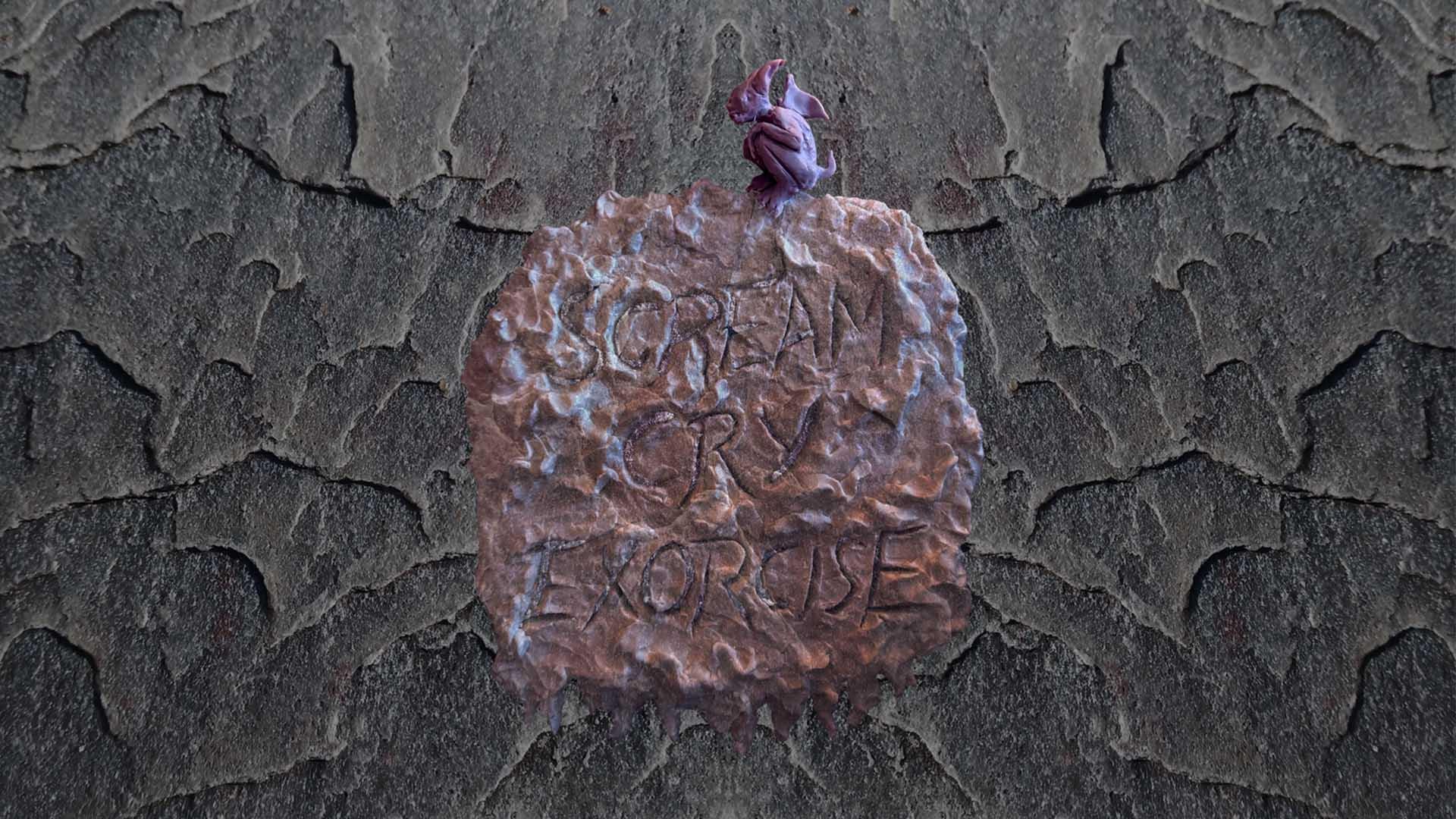
SCREAM CRY EXORCISE by Tarleena Laakko, Julia Jäntti and Virpi Nieminen is a demonic micro-spectacle about the monstrousness of life — something unexpected, elastic, and ever-shifting. Instead of banishing what possesses us, we surrender to it. Could embracing and invoking demons transform the culture they emerge from? With the motto “too possessed to be depressed,” the piece revels in DIY magic, haunting rhythms, and the wonders of small-scale spectacle.
Languages: Finnish and English
The performance is directed for adult audiences.
The work was selected for the A Dream in Four Colours collection exhibition’s performance programme through Kiasma Theatre’s open call.
This is the second part of the Monstrous performance series by Laakko-Jäntti-Nieminen. The first part, EAT PREY LOVE, premiered at Mad House in Helsinki in 2024. The first part will be presented on 29 January 2026 at the Espoo Cultural Centre.
Direction / text: Tarleena Laakko
Lighting design: Julia Jäntti
Set design: Virpi Nieminen
Costume design: Jenni Räsänen
Composition & sound design:Nicolas “Leissi” Rehn
Wig construction: Joonas Lampi
Wig planning: Jenni Räsänen & Joonas Lampi
On stage: Pie Kär & Asta Honkamaa
Virpi Nieminen is a scenographer and visual artist whose work spans contemporary dance, contemporary theatre, performance art, as well as site-specific and immersive performances and installations. At the core of her practice lies an interest in the relationship between the body and space. In her works, she has explored questions of new materialist and posthumanist dramaturgies of the stage. Her aesthetic is inspired by queer culture, monsters, ruins, and dirt. In addition to scenography, she has worked as a costume designer, performer, convenor, and writer.
Julia Jäntti is a visual designer and artist based in Helsinki. She holds a Master of Arts in Lighting Design from the Theatre Academy of the University of the Arts Helsinki, and has also studied production design for film and media—focusing on TV and film set design—at Stockholms Konstnärliga Högskolan within the Narrative Space programme. Jäntti currently works as a lighting designer at Svenska Teatern in Helsinki. She is inspired by interdisciplinary and polyphonic stages that challenge artistic conventions and seek to expand the frameworks and mannerisms of performing arts.
Asta Honkamaa is a performing dramaturg and playwright. At the moment, she is interested in the forces affecting the pelvic area, the experience of relief, and various types of grainy candies.
Tarleena Laakko is a dramaturg and performance maker. Her work is guided by associative dramaturgy, language as a means of touching the body, and the performativisation of the indeterminate.
Jenni Räsänen is a costume designer, scenographer, and clothing artisan. She holds a Master of Arts from Aalto University and has since worked in the independent performing arts field across theatre, dance, circus, and immersive contemporary performance. Räsänen is currently interested in experimentation, unconventional materials, and poetic expression.
Nicolas “Leissi” Rehn is a composer, sound designer, musician, and father of two. In 2019 he received the Teosto Prize, and this Easter he saw three magnificent frogs in a ditch—one of which said: “This spring you will not get norovirus.” Rehn was grateful for the words, though not entirely sure whether the frog was telling the truth or merely teasing him. Quod fors feret, feremus aequo animo.
Pie Kär is a multidisciplinary dance artist whose still-unsated passion lies in examining the relationship between the audience and the performance situation. In recent years, in addition to contemporary dance and choreography, they have worked within contemporary theatre and through singing. Kär is proud of their project SOCIAL SOIL (2020–2022), in which they composted the biodegradable waste of the Moving in November festival and distributed the resulting festive soil to audience members who were in the mood for conversation. They also dedicate part of their time to teaching dance and movement research classes within the Queer Dance Group’s dancing community.